What is the purpose of a NG Tube?

What is the purpose of a NG Tube?

A nasogastric (NG) tube is a flexible tube of rubber or plastic that is passed through the nose, down through the esophagus, and into the stomach. It is usually used to administer liquid food and medication to support patient’s nutrition and medications intake. At times, it could also be inserted to remove things from the stomach, like toxic substances or air, in order to facilitate wound healing after internal surgery.

Source: https://www.verywellhealth.com/nasogastric-ng-tube-1943087

What are the risks of nasogastric intubation?

What are the risks of nasogastric intubation?

Patients may feel some discomfort as the tube passes through their nostril into your stomach. If the NG tube isn’t inserted properly, it can injure the tissue inside the nose, sinuses, throat, esophagus, or stomach. When oncology patients have low neutrophils or are experiencing mucositis, Doctors would not recommend carrying out NG tube intubation procedure as it can potentially cause infection. There is also the risk of mistakenly threading it through the windpipe into the lungs. If that happens, feeds may accidentally pass into the lungs and lead to pneumonia or other infections.

NG tube can potentially become blocked, torn, or dislodged. That can lead to additional complications. Using an NG tube for too long can also cause ulcers or infections to develop on the tissue of your sinuses, throat, esophagus, or stomach. In KK Hospital Singapore, they practice replacing the NG tube every 4 to 6 weeks and it is recommended to insert the new tube into the other nostril.

Source: https://www.healthline.com/health/nasogastric-intubation-and-feeding#risks

How to care for patient with NG tube

How to care for patient with NG tube

Checking the NG tube placement
Before putting any formula, water or medication down the NG tube, you should check to ensure the tip of the tube is actually in the stomach and not in the lung. This is done by removing some gastric fluid from the tube with a syringe and testing it for acidity (indicated by a colour change) using litmus paper/ pH indicator.

Flushing the tube
Regular flushing will help prevent the NG tube from becoming blocked. At a minimum you should flush the NG tube after every feed and after giving medication, using 5-20mL of water.

Managing a blocked NG tube
If patient’s NG tube does becomes blocked:
– Check that the NG tube is not kinked or bent.
– Fill a 10ml* syringe with warm water and flush into the NG tube using reasonable pressure. If you meet resistance try a gentle push pull action on the syringe for several minutes to see if you can move the blockage.
– If this doesn’t work, contact your health professional for advice.
* Do not use syringe less than 10ml as smaller syringes create too high pressure which may cause NG tube to rupture.


Regular flushing will help prevent the NG tube from becoming blocked. To further reduce the risk of the NG tube becoming blocked, request medications in liquid form and check with your Pharmacist as to whether your child’s medications are safe to go down the NG tube. For medication in tablet form, ensure to pulverize finely using a pill crusher then dissolve powder in lukewarm water. Some medication, like magnesium, does not dissolve well in water. Take extra care when giving it via the NG tube.

What to do if your child’s NG tube comes out?
Unless you have been trained by your healthcare professional on how to insert an NG tube, do not attempt to reinsert a tube which has been dislodged. It is good to note the measurement of patient’s NG tube placement (there are numbers on the tubing) so that you are able to check when you suspect the tube has slid out of place.

Healthcare professionals at emergency department will be able to assist in NG intubation. It is advisable to keep a spare NG tube with you for emergencies and take it with you to the A&E department.

Skin care
As the tube will be secured to the face, good care of the skin will prevent it from becoming inflamed or irritated.
– Keep the skin around the NG tube clean by using warm water and a wash cloth.
– Remove any crusts or secretions from around the nose.
– When changing tapes use adhesive remover if available to prevent damaging the skin.
– Make sure the skin is clean and dry before applying new tape.
– Some adhesive can be harsh on the skin. I recommend applying Duoderm Extra Thin dressing on the skin, below the dressing. See section on Changing NG tube Dressing.

Source: https://www.schn.health.nsw.gov.au/fact-sheets/tube-feeding-caring-for-your-childs-nasogastric-tube

How to use the NG tube

How to use the NG tube

Usually a NG tube has 2 port of different width for bolus feeding and continuous feeding (with a feeding pump). Here are the steps for bolus feeding of formula:

Step 1 : Wash your hands.

Step 2 : Measure the correct amount of formula and warm it to the desired temperature. Ready the necessary consumables including:
– 35ml or 60ml Oral Syringe for formula milk
– 12ml or smaller Oral Syringe for aspirating stomach content
– 2 medicine cups, one with a small piece of litmus (PH) paper and the other with water for flushing

Step 3 : Clamp the tube then open the bolus feeding port. Using the smaller syringe, aspirated the stomach content to check tube placement. Aspirate should show (acidic) reading of lower than 8. Remember to keep the tube clamp or port capped. If the aspirate has milk curds or is of thick consistency, flush tube with 5ml of water before next step to aid in smooth bolus flow.

Step 4: Clamp the tube then open the bolus feeding port to attach the large syringe. While keep the tube clamp, pour the formula into the syringe. Allow the formula to run for the same amount of time as it would take the child to drink it by mouth, or as prescribed by the doctor. Keep the bottom of the syringe no higher than 6 inches above the child’s stomach. Continue adding formula into the syringe until the prescribed amount is given.

Troubleshoot:
– If formula is not flowing down naturally, place a plunger into the syringe and push slightly. Remove the plunger gently and allow the formula to flow in by gravity.


Step 5 : When the syringe is empty, flush the tube with 10 – 20ml of warm water. Clamp the tube, remove the syringe and cap the port.

Source: https://www.childrensmn.org/educationmaterials/childrensmn/article/15553/nasogastric-tube-feeding/ eding/

How to secure the NG tube

How to secure the NG tube

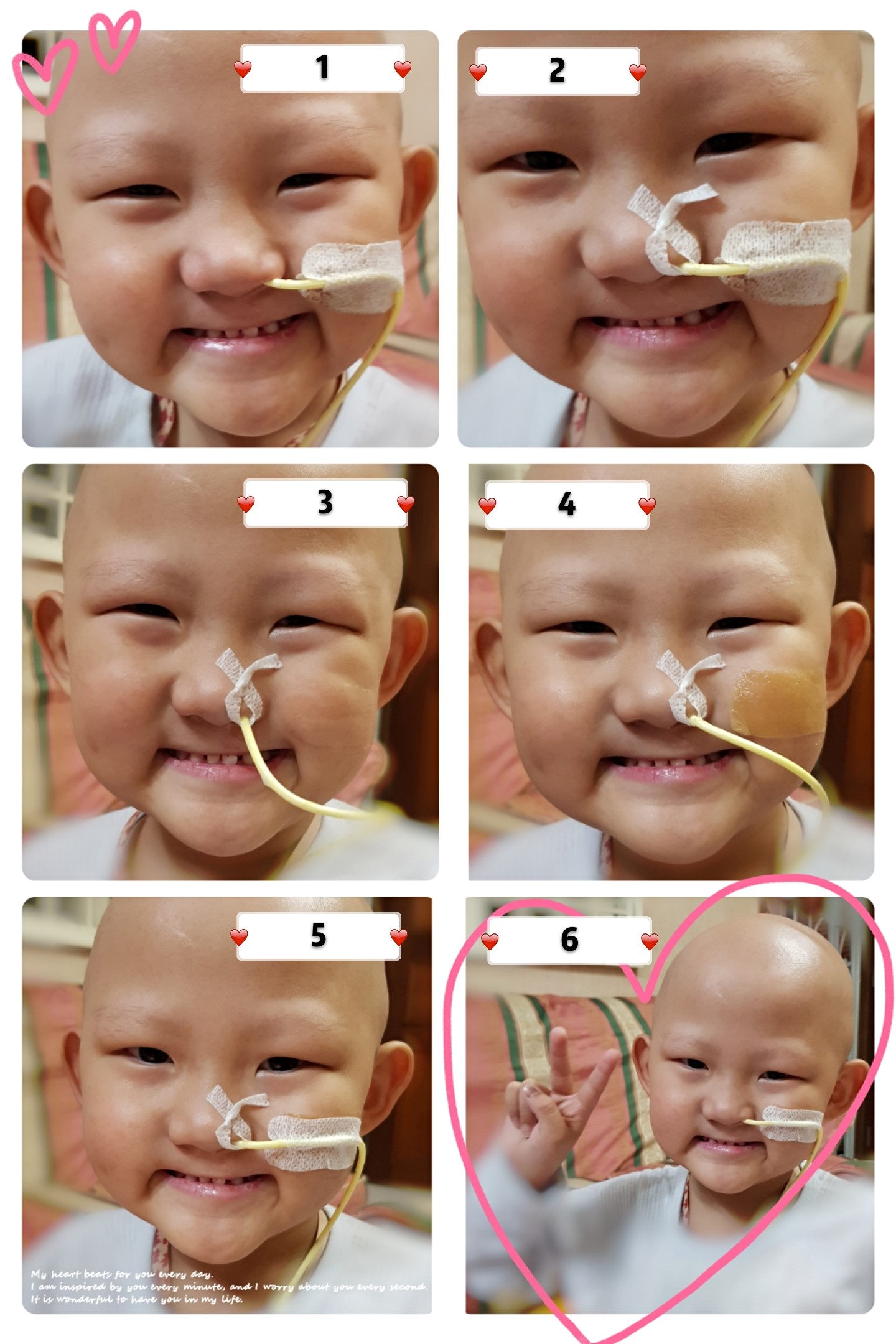
Taping is an art, and there is definitely a process of trial and error to find what works best for you. Here are some pictures of the various ways a NG tube can be taped. The method I liked best is to place a piece of Duoderm Extra Thin dressing on the skin, run the NG tube run on top of it, and then Hypafix Self Adhesive Dressing over. You may refer to my next post to see how I custom cut the dressings for best results.

I used to use Tegaderm and IV3000 dressing but found those curl up on the sides easily. However, those clear dressing looks most natural and appealing.

The dressing currently provided at KKH is NOT Hypafix brand and does not hold as well as the original. There are 3 types of clear film available at KKH – IV3000 being the stickiest, followed by Diamond Tegaderm, then normal Tegaderm.

How to change NG tube dressing

How to change NG tube dressing

The lifespan of a NG tube varies with different manufacturer but they generally last more than 1 month. Within that period, the dressing can get soiled or lose its adhesiveness. I commonly have to change the dressing every other week.

It would be helpful if you have someone to hold the tube in place (it slides out easily like a slippery fish) while you change out the dressings. But if you are by yourself, fret not. Here is a method I use to hold tube in place.

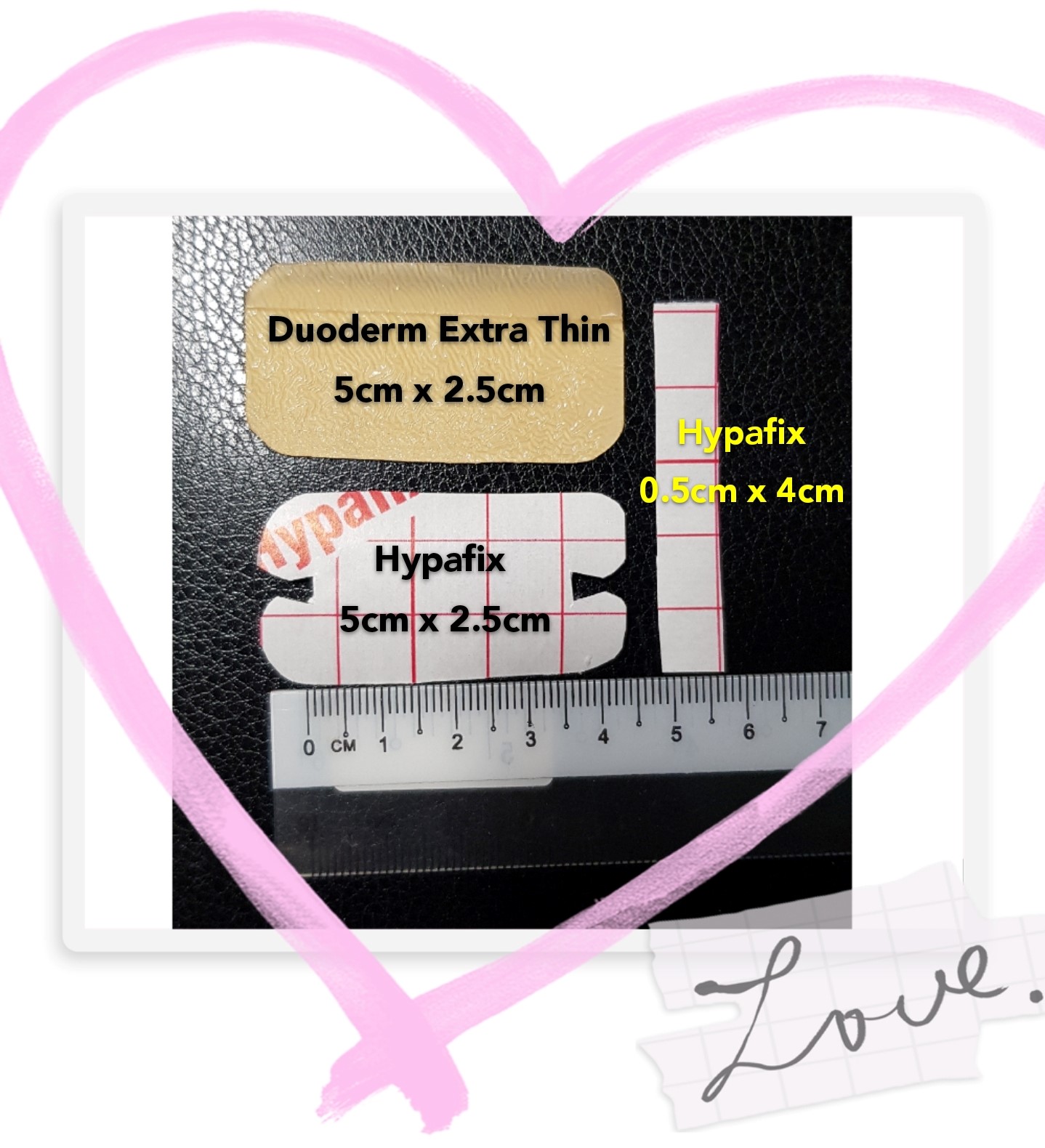
Step 1 : Cut Duoderm Extra Thin and Hypafix Dressing to recommended size (5cm x 2.5cm) and shape. Standby a bottle of Niltac adhesive remover (optional).
Step 2 : Pass a narrow strip of Hypafix (0.5cm x 4cm) under the NG tube to and secure it firmly on the nose.
Step 3 : Remove the soiled dressings with Niltac adhesive remover.
Step 4 : Paste Duoderm Extra Thin on the cheek. I like to paste it closer to the nose for better anchorage. When I leave a distance between the nostril and the dressing, the tube slides out a little whenever he cries or sneeze. It makes him gag whenever I push the tube back in.
Step 5 : Run the NG tube across the Douderm dressing and paste Hypafix dressing on top the tube. Ensure both ends of the tube runs between the notches for best results.
Step 6 : Gently remove the strip on the nose.